
Couples Therapy in Calgary
Feeling disconnected, stuck in the same arguments, or struggling to communicate? You don’t have to figure it out on your own.

Evidence-Based Approach
Practical strategies grounded in psychological science.Therapy designed to create measurable change in your everyday life.Practical, not just talk
Therapy that fits your life
Virtual or in-person sessions, in meets you where you are.Couples Therapy in Calgary
Relationships can become difficult to navigate, even when two people care deeply about each other. You may love your partner and still find yourselves feeling disconnected, misunderstood, or stuck in the same conflicts.
Maybe you keep having the same arguments without ever feeling like the underlying issue gets resolved. You might struggle to communicate your needs, feel like your partner doesn't understand you, or find that conversations quickly turn into defensiveness, frustration, or withdrawal. Maybe intimacy has changed, trust has been affected, or stress from work, family, parenting, or other life circumstances has started putting strain on your relationship.
For some couples, relationship difficulties don't always look like constant conflict. They can show up as emotional distance, difficulty talking about important issues, avoiding difficult conversations, reduced intimacy, resentment, or simply feeling more like roommates than partners. You may have become good at functioning together and getting through day-to-day life, while feeling increasingly disconnected underneath the surface.
You might even find yourselves wondering how things became so difficult. There may not be one obvious reason. Relationship problems can develop through a combination of communication patterns, attachment needs, past experiences, unresolved conflict, stress, changing circumstances, and the ways each partner responds when they feel hurt, rejected, or misunderstood.
You Don't Have to Figure It Out on Your Own
Couples therapy can help you understand the patterns that are creating distance or conflict and develop more effective ways of relating to each other. At Arete Psychology in Calgary, we use evidence-based approaches to help couples work through communication difficulties, recurring conflict, emotional disconnection, intimacy concerns, trust issues, and other challenges affecting their relationship.
Therapy isn't about deciding who is right or wrong. Instead, we'll work toward helping both partners feel heard and understood, communicate more effectively, and develop healthier ways of responding to each other's needs.
Whether you're dealing with ongoing conflict, navigating a particularly stressful period, trying to reconnect after growing apart, or simply wanting to strengthen an already healthy relationship, couples therapy can provide a space to slow things down, gain perspective, and make meaningful changes together.
You don't have to wait until your relationship is in crisis to seek support.

Relationship difficulties don’t always look like constant arguing. Sometimes, they look like feeling disconnected, struggling to communicate, avoiding difficult conversations, or feeling like you keep getting stuck in the same patterns.
Signs Your Relationship May Benefit From Couples Therapy
-
You may still care deeply about each other but feel emotionally distant or less connected than you used to. Conversations may become focused on logistics and responsibilities rather than sharing what you're thinking and feeling.
-
You may find yourselves having the same disagreement over and over without feeling like anything actually changes. Even when the original issue seems resolved, the same pattern can quickly resurface.
-
Conversations about important topics may quickly turn into defensiveness, frustration, criticism, or shutting down. You may feel like you're talking to each other but not actually being heard or understood.
-
You may avoid bringing up certain topics because you know they’re likely to lead to conflict. While avoiding the conversation can provide temporary relief, important issues can build into resentment or emotional distance over time.
-
Your relationship may function well on the surface while feeling emotionally disconnected underneath. You might share a home, responsibilities, and routines but miss the sense of closeness and partnership you once had.
-
Trust can be affected by infidelity, dishonesty, broken agreements, or repeated disappointments. Rebuilding trust often requires more than simply moving on—it requires understanding what happened and creating a path forward together.
-
Physical or emotional intimacy may have decreased, become a source of tension, or started to feel disconnected from the rest of your relationship. Changes in intimacy can sometimes reflect underlying conflict, stress, resentment, or unmet emotional needs.
-
You may regularly feel like your partner doesn't understand what you need or why something matters to you. Your partner may be experiencing the same thing, creating a cycle where both people feel unseen and misunderstood.
-
Small disagreements can quickly become much larger conflicts. You may find yourselves raising your voices, becoming defensive, bringing up past issues, or saying things you later regret.
-
Instead of arguing, you may shut down, become emotionally distant, or stop engaging when conflict arises. Withdrawal can sometimes be a way of protecting yourself, but over time it can make it harder to reconnect.
At Arete Psychology, we take an individualized, evidence-based approach to couples therapy. We’ll work together to understand the patterns that may be creating conflict or disconnection while developing practical strategies to improve communication, strengthen your connection, and navigate challenges together.
How Couples Therapy in Calgary Can Help

There isn’t always one clear reason why a relationship becomes difficult. Often, relationship challenges develop from a combination of individual experiences, communication patterns, circumstances, and changes over time. What creates conflict for one couple may look very different for another.
Some common contributors include:
Communication patterns
Recurring conflict
Unmet emotional needs
Major life changes
Work and financial stress
Parenting and family responsibilities
Past experiences
Attachment patterns
Differences in expectations or values
Trust and intimacy concerns
What Can Affect Your Relationship

The goal of couples therapy isn’t to guarantee that you’ll never disagree or experience conflict again. Differences are a normal part of relationships, and no therapist can promise that conflict will never return.
Instead, therapy can help you develop the understanding, skills, and confidence to navigate challenges together.
As you learn to recognize your relationship patterns, communicate more effectively, and respond differently during difficult moments, conflict can become less overwhelming and more productive. With practice, these skills can become more familiar, helping you feel more confident in your ability to work through disagreements together.
Over time, you can become better at interrupting unhelpful patterns before they escalate—and better equipped to keep conflict from having such a significant impact on your connection, communication, and everyday life.
The goal isn’t a relationship without conflict. It’s a relationship where you know how to work through it together.
The Goal Isn’t to Eliminate Conflict, It’s to Learn How To Navigate It

Building Connection: Tools for Healthier Communication and Conflict
1. Understand your relationship patterns
Therapy can help you understand the patterns behind recurring conflict, disconnection, and misunderstandings.
2. Develop practical communication tools
We’ll work on practical skills to communicate your needs, listen effectively, and navigate difficult conversations.
3. Rebuild connection
Therapy can help you feel more understood, connected, and confident in your ability to handle challenges together.
4. Create lasting change
The goal is to develop healthier patterns of communication and connection that carry into your everyday life together.
You don’t need to agree on everything to have a strong relationship—you need to learn how to navigate differences together.

What does Couples Therapy look like?
Your goals for therapy are unique, but we may work toward:
Understanding the patterns affecting your relationship
Developing healthier ways to communicate
Navigating conflict more effectively
Rebuilding trust, connection, and intimacy
Creating a stronger, more satisfying relationship

Our Approach to Couples Therapy
-
Gottman Couples Therapy focuses on helping couples understand and improve the patterns that influence their relationship. It emphasizes effective communication, managing conflict, strengthening friendship and intimacy, and building a healthier foundation for the relationship.
-
Emotionally Focused Couples Therapy (EFT) focuses on the emotional bond between partners and the attachment needs underneath recurring conflict. It helps couples understand negative interaction cycles, express their underlying emotions and needs, and build a more secure and connected relationship.
-
There’s no single formula for good therapy. Your experiences, personality, goals, and challenges are different from anyone else’s, so your therapy should be too.
At Arete Psychology, your therapist will work with you to:
Understand your experience — taking the time to understand what’s happening and what matters to you.
Develop practical strategies — applying evidence-based tools to the challenges you’re facing.
Adapt as you progress — adjusting the approach based on what is and isn’t working for you.
Work at the right pace — challenging you when it’s helpful while respecting where you are in the process.
Focus on meaningful change — connecting the work in therapy to the relationships, work, and life you want to build.
Start Couples Therapy in Calgary Today
Couples therapy can help you break unhelpful relationship cycles, improve communication, and rebuild the connection that brought you together.You don’t have to do this on your own.
Ready to get started?

1. Book a Consultation
Choose a convenient time for a brief phone or video consultation. We’ll answer your questions, learn a little about what brings you to therapy, and make sure Arete is a good fit.
2. Meet Your Psychologist
Your first session is an opportunity to talk about what’s been going on, what you’d like to change, and what you hope to get from therapy.
3. Build Your Plan
Together, we’ll identify your goals and develop a personalized approach to help you make meaningful, lasting changes.
No pressure. No commitment. Lets get to work.
Relationship Challenges: How They Can Affect Your Everyday Life
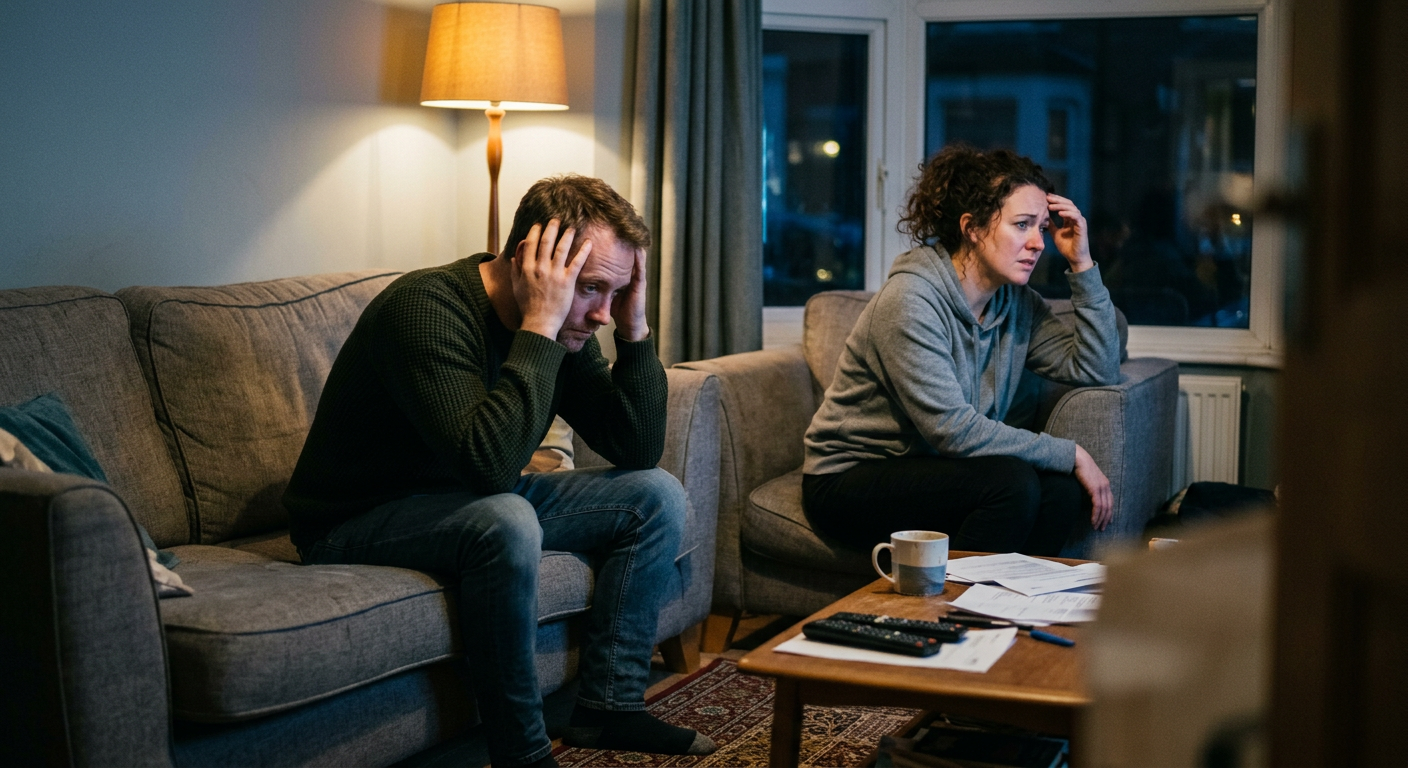
How Relationship Difficulties Can Affect Your Everyday Life
Relationship difficulties don’t just affect what happens between you and your partner. They can influence your emotions, stress levels, behaviour, work, family life, and overall sense of well-being. For some couples, relationship problems are obvious. For others, they look more like emotional distance, frequent frustration, difficulty communicating, resentment, or feeling like you’re constantly walking on eggshells.
Conflict, Communication, and Feeling Disconnected
The same arguments keep happening
You may find yourselves having the same disagreements repeatedly without feeling like the underlying issue is ever resolved.Feeling unheard or misunderstood
You may feel like your partner doesn't understand what you're trying to say or why something matters to you. Your partner may be experiencing the same thing, leaving both of you feeling unseen.Difficulty communicating your needs
You may struggle to express what you need from your partner or find that attempts to communicate quickly become defensive or emotionally charged.Feeling emotionally distant
You may still care deeply about each other while feeling less connected than you once did. Conversations can become focused on responsibilities and logistics rather than emotional connection.Walking on eggshells
You may find yourself carefully choosing what you say or do because you're worried about how your partner will respond. Over time, this can make it difficult to feel relaxed and authentic in the relationship.
The Emotional Side of Relationship Difficulties
Relationship problems can create significant emotional stress, particularly when conflict or disconnection becomes an ongoing pattern.
Frustration and resentment
Unresolved concerns can build over time, leaving you feeling frustrated, unappreciated, or like you're carrying more than your fair share.Feeling lonely in the relationship
You can feel lonely even when you're physically together. Emotional distance can be particularly painful when you want connection but don't know how to get back to it.Feeling rejected or unimportant
Repeated conflict or a lack of emotional connection can leave you questioning whether your needs matter to your partner or whether you're still important to them.Difficulty feeling safe during conflict
Arguments may feel unpredictable or overwhelming, making it difficult to stay open and engaged when you're feeling hurt or threatened.Loss of closeness and intimacy
Emotional or physical intimacy may decrease when unresolved conflict, stress, or resentment begins to affect the relationship.
Patterns That Can Keep You Stuck
Relationship difficulties often become less about the original issue and more about the pattern the two of you get caught in.
Pursuing and withdrawing
One partner may push for conversation or reassurance while the other pulls away or shuts down. The more one partner pursues, the more the other may withdraw, creating a cycle that is difficult to break.Criticism and defensiveness
Attempts to express concerns can turn into criticism, while the other partner responds by becoming defensive. Both partners can end up feeling attacked rather than understood.Avoiding difficult conversations
You may stop bringing up important issues because you don't want another argument. While this can reduce conflict in the short term, unresolved concerns can create greater distance over time.Bringing up the past
Previous arguments or hurts may continue to resurface during new disagreements. This can make it difficult to stay focused on the issue in front of you.Shutting down or withdrawing
Instead of arguing, one or both partners may become quiet, emotionally distant, or stop engaging. Taking space can be healthy, but when withdrawal becomes a recurring pattern, it can make reconnection more difficult.
You Don't Have to Keep Living in the Same Cycle
You don't need to eliminate conflict completely to have a healthy relationship. The goal is to understand the patterns that are creating conflict or disconnection and develop healthier ways of communicating, responding, and reconnecting.
Couples therapy can help you break unhelpful relationship cycles, improve communication, and build a stronger, more connected relationship.
Relationship conflict is not necessarily a sign that something is fundamentally wrong with your relationship. Often, conflict develops through patterns between partners—the ways you each respond when you feel hurt, misunderstood, rejected, or overwhelmed.
The Cycle You Get Caught In
Most couples have disagreements. What matters is what happens when those disagreements occur.
One partner may become frustrated and push for answers or connection, while the other feels overwhelmed and withdraws. The more one partner pursues, the more the other pulls away—and the more one withdraws, the more the other may pursue.
In these moments, you may both be trying to protect yourselves or get your needs met, but the pattern can leave both of you feeling:
Unheard or misunderstood
Defensive or criticized
Rejected or disconnected
Frustrated and overwhelmed
Like you're having the same argument over and over
When Conflict Becomes a Pattern
The problem isn't necessarily the disagreement itself. It's when the same pattern begins to repeat.
You may find yourselves:
Having the same arguments without resolving the underlying issue
Criticizing or becoming defensive when trying to communicate
Shutting down or withdrawing when conversations become difficult
Bringing up past hurts during current disagreements
Avoiding important conversations to prevent another conflict
Feeling like you have to be careful about what you say or do
Over time, these patterns can become automatic. You may start reacting to your partner based on what you expect will happen rather than what is actually happening in the moment.
What Shapes Relationship Patterns
There isn't always one reason why couples become stuck. Relationship patterns can develop through a combination of experiences and circumstances:
Attachment and emotional needs
The need to feel loved, valued, understood, and secure can strongly influence how we respond when we feel disconnected from our partner.
Past experiences
Previous relationships and family experiences can shape how you communicate, handle conflict, and respond to vulnerability.
Stress and life circumstances
Work, finances, parenting, health, and major life changes can place significant pressure on a relationship and make existing patterns more difficult to manage.
Communication patterns
Over time, couples can develop predictable ways of responding to one another. What begins as an attempt to solve a problem can gradually become a cycle of criticism, defensiveness, withdrawal, or resentment.
Different expectations
Partners may have very different ideas about communication, intimacy, finances, parenting, household responsibilities, or what a healthy relationship should look like.
Common Myths About Relationship Conflict
“We shouldn't be fighting if we really love each other.”
Conflict is a normal part of relationships. Healthy couples can disagree—the goal isn't to eliminate conflict, but to develop healthier ways of navigating it.
“Someone has to be right.”
Many relationship conflicts aren't about one person being right and the other being wrong. Sometimes the more important question is understanding what each person is experiencing and what they need from the relationship.
“If we can't solve it ourselves, our relationship is failing.”
Many couples develop patterns that are difficult to recognize from inside the relationship. Seeking support doesn't mean your relationship has failed. It can mean you're willing to understand what's happening and work toward something better.
“We just need to communicate better.”
Communication matters, but simply talking more isn't always enough. If conversations repeatedly lead to the same cycle of criticism, defensiveness, or withdrawal, understanding the pattern underneath the communication can be an important part of creating change.
Why Relationship Problems Can Persist Without Support
Without the right tools or understanding, couples can become increasingly stuck in familiar patterns:
You keep having the same argument without addressing what's underneath it.
You avoid difficult conversations, allowing resentment to build.
You respond to each other's reactions rather than the underlying needs or emotions.
Conflict becomes more about protecting yourself than understanding your partner.
Emotional distance grows as attempts to reconnect become less successful.
Over time, the cycle can become increasingly automatic and difficult to interrupt.
Couples therapy can help you understand the cycle you're caught in, develop healthier ways of responding to each other, and create a relationship where conflict doesn't have to come at the expense of connection.
When You Keep Having the Same Fight, It May Be Time for Help
Frequently Asked Questions About Couples Therapy
-
You don’t have to wait until relationship difficulties become overwhelming to seek support. If conflict or disconnection is starting to interfere with your communication, intimacy, trust, emotional connection, or ability to enjoy your life together, couples therapy may be worth considering.
You might benefit from anxiety therapy if you find yourself:
Constantly worrying or overthinking
Struggling to relax or switch off
Avoiding situations because they make you anxious
Having difficulty sleeping because your mind won't slow down
Feeling increasingly irritable, overwhelmed, or on edge
Seeking reassurance or certainty before making decisions
Relying on unhealthy habits or distractions to manage stress
Finding that anxiety is affecting your relationships, work, or performance
Spending more time managing anxiety than you want to
-
Couples therapy isn't about simply sitting down and talking about everything that's wrong. It's about understanding what is driving the conflict or disconnection, what keeps the cycle going, and what you can do differently together.
At Arete Psychology, therapy is collaborative and personalized to your relationship. The specific approach will depend on your circumstances, goals, and what you find most helpful, but couples therapy may involve:
-
Yes. Couples therapy can be highly effective, particularly when treatment is tailored to the concerns you're experiencing and the patterns affecting your relationship. Evidence-based approaches such as Gottman Couples Therapy and Emotionally Focused Couples Therapy (EFT) can help improve communication, reduce unhelpful conflict patterns, strengthen emotional connection, and build a healthier relationship.
-
There’s no set timeline for couples therapy. Some couples experience meaningful improvement within a few sessions, while others benefit from longer-term support.
The right length of therapy depends on your goals, circumstances, relationship patterns, and the challenges you're working through. Together, you and your therapist can adjust the pace and approach as you progress.
The goal isn’t to keep you in therapy indefinitely—it’s to help you develop the insight and skills you need to move forward together with confidence.
-
Sometimes relationship difficulties resolve on their own, particularly when they’re connected to a temporary source of stress or a specific life circumstance. However, recurring conflict or disconnection often doesn’t simply disappear without addressing the patterns that maintain it.
If relationship difficulties are affecting your communication, intimacy, trust, or ability to enjoy your life together, it may be worth seeking support rather than continuing to hope things will improve on their own.
Couples therapy can help you understand what’s driving the conflict, break unhelpful cycles, and develop practical tools to communicate and connect more effectively.
You don’t have to wait for your relationship to be in crisis before doing something about it.
-
There isn’t one therapy that is best for every couple. The most effective approach depends on the challenges you're experiencing, the patterns affecting your relationship, and your goals for therapy.
Gottman Couples Therapy is a well-established approach that focuses on improving communication, managing conflict, strengthening friendship and intimacy, and building a healthier foundation for the relationship.
Emotionally Focused Couples Therapy (EFT) focuses on the emotional bond between partners and the attachment needs underneath recurring conflict. It can help couples understand negative interaction cycles, express their underlying emotions and needs, and build a more secure and connected relationship.
For some couples, it can also be helpful to explore deeper patterns contributing to relationship difficulties. Approaches such as attachment-based, psychodynamic, or other evidence-based therapies may be incorporated depending on your circumstances and goals.
At Arete Psychology, we take a personalized approach, drawing from different evidence-based therapies rather than forcing every couple into the same treatment model.
The best therapy is ultimately the approach that fits your relationship, your goals, and the challenges you're facing together.
-
Yes. Therapy is confidential, and what you discuss with your psychologist is generally kept private. Confidentiality creates a safe space to talk openly about your thoughts, emotions, relationships, and experiences without worrying that your information will be shared with others.
There are some legal and ethical limits to confidentiality, such as situations involving serious and imminent risk of harm, suspected abuse or neglect where reporting is required, or when disclosure is otherwise required by law.
Your psychologist will explain these limits during your initial session so you understand what is private and what circumstances may require information to be disclosed.
You should feel comfortable asking questions about confidentiality at any point in therapy.
-
Getting started is simple. You can reach out to Arete Psychology directly—no referral is required.
1. Book a Consultation
Ask questions, share what you’re experiencing, and see if we’re a good fit.2. Meet With Your Psychologist
We’ll explore what’s been going on and what you’d like to change.3. Build a Plan Together
We’ll create a personalized approach to help you better understand and manage your anxiety.Ready to take the first step? Book a consultation with Arete Psychology today.
Need more information?
Contact us at jeff@aretepsychology.com or book your consultation directly below.